






|
Quantity
|
Total
|
||
|
|
|||
|
|
|||
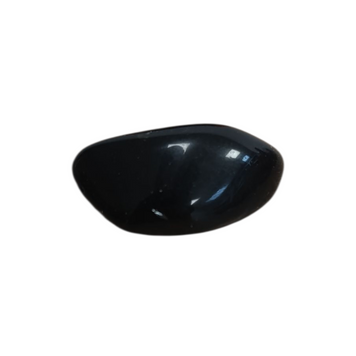
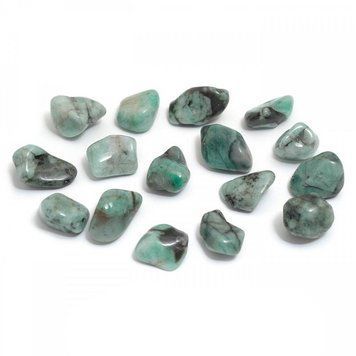
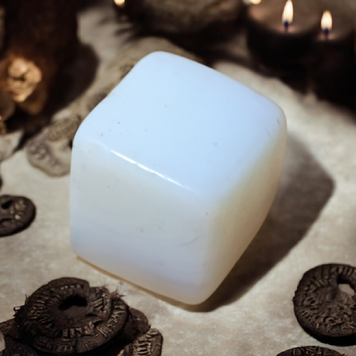
Tumbled stone is a small stone polished smooth, with no sharp edges. Alongside classic rounded tumbled pieces, the catalog also carries cubes — the same polishing principle, but with sharp facets instead of a rounded shape.
The same product gets called tumbled stone, polished stone, and tumbled natural stone. The wording differs, the format stays the same.
How tumbling actually happens
A raw stone goes into a tumbler's rotating drum along with grit and water, and the drum spins for days on end. The process runs through several stages — from coarse grit that removes sharp edges to the finest polishing powder.
Each stage takes anywhere from a few days to a week, and the full cycle for one stone stretches over four to six weeks. Coarse grit in the first stage removes up to a centimeter of material off the surface; the fine finishing stage removes hundredths of a millimeter.
That's exactly why tumbled stone costs more than a raw stone of the same weight. Behind that smooth surface sits over a month of mechanical work, not a minute of hand shaping.
Why the cube shape ties specifically to the element of earth
Unlike rounded tumbled stone, a cube isn't a result of drum polishing. It's precision cutting — the stone is cut and polished into sharp right angles.
In Plato's classical system, laid out in the dialogue «Timaeus», each element corresponded to a specific solid: fire to the sharp tetrahedron, air to the octahedron, water to the icosahedron, and earth to the cube specifically, because its flat square faces are the most stable and «grounded» of all the shapes.
In that same system, the cube held a distinct place. Fire, air, and water were considered interchangeable with each other through shared triangular faces, while earth-as-cube was not, since a square face isn't built from those same triangles.
What minerals come as tumbled stone or cubes
Shape and size vary, the mineral range covers almost the whole catalog. The table shows a few examples.
|
Format |
Catalog example |
What sets it apart |
|
Rounded tumbled |
obsidian, labradorite, moonstone, onyx, shungite |
A classic rounded shape with no sharp edges |
|
Cube |
amethyst, sodalite, red jasper, tiger's eye, lapis lazuli |
Sharp right angles, the element of earth |
|
Rare minerals |
emerald, dragonblood stone |
Less common, a higher price |
|
Themed tumbled |
labradorite with a triple moon |
An added carved symbol on top of the standard shape |
Price depends mostly on mineral and size, not shape — a cube and a rounded tumbled piece of the same mineral cost about the same.
Choosing tumbled stone or a cube for your purpose
If a pleasant rounded shape for carrying in a pocket or hand matters, classic tumbled stone fits best.
If it's stability and structure that resonate, a cube carries that idea literally through its shape.
Pick the mineral separately from the shape: the property comes from the stone, the shape only affects how comfortable it is to work with.
A consultation can tell you which mineral and format fit
The catalog carries dozens of minerals in two formats — a consultant can help narrow the choice down by specific property and budget.
- Honest advice on a mineral for a specific property.
- Original minerals only, checked before they enter the catalog.
- Orders are processed and shipped the same day.
- The loyalty program gives a cumulative discount from one to ten percent, promo codes through the newsletter, and a separate discount on the shop's birthday.
- Help matching size to where the stone will be kept or carried.
Tumbled stones and cubes at Artifacts of the Vedun get bought for a collection, for pocket carry, or for an altar. Price depends on mineral — from 55 hryvnias for a simple opal cube to 650 for a themed labradorite tumbled piece. If you're unsure which mineral fits, a consultant can advise in chat before you order.
Questions about tumbled stones and cubes
How long does tumbling one stone actually take?
A full cycle runs four to six weeks, across several stages with different grit: from coarse, which removes sharp edges, to the finest polishing powder.
Why does a cube cost about the same as rounded tumbled stone?
Price depends mostly on mineral and size, not shape — cutting a cube and tumbling a rounded piece are comparable in complexity.
Does the cube shape carry any specific meaning, or is it just geometry?
In Plato's classical system, the cube is traditionally tied to the element of earth — the stability and structure of square faces stood in contrast to the more mobile shapes of fire, air, and water.
Can tumbled stone or a cube be carried in a pocket every day?
Yes, that's exactly why tumbled stone is made compact and smooth — there are no sharp edges to get in the way.
What payment methods are available when ordering?
Payment is available by card online, by bank transfer, by cash on delivery with a 150-hryvnia prepayment, or in cash at the shop.