








|
Quantity
|
Total
|
||
|
|
|||
|
|
|||
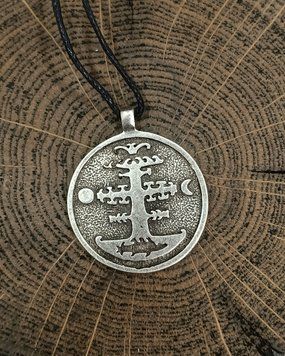
Slavic charms are symbols from the pre-Christian tradition of the Eastern and Southern Slavs, each with its own meaning and area of effect. Kolovrat, Alatyr, and Molvinets carry their own symbolism, separate from Norse runes or the mythological figures of Viking amulets.
The tradition is reconstructed from folklore, embroidery and carving patterns, and chronicle references — there's no single ancient canon that survives as one complete text. The meanings used today grew out of these sources and the oral tradition of Rodnovery.
Which Symbols Are Worn as Slavic Charms
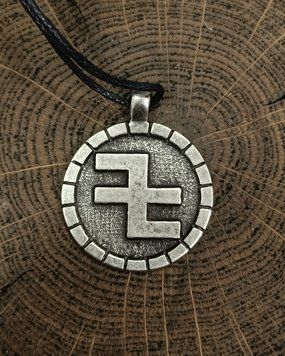
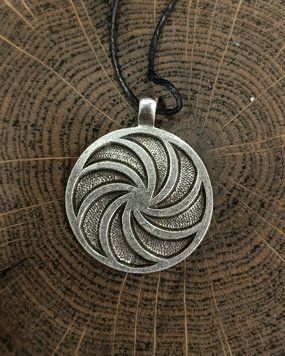
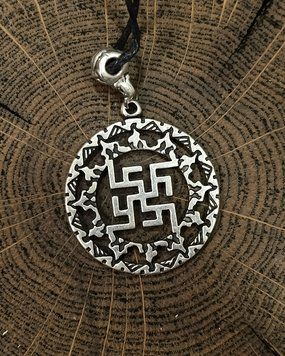
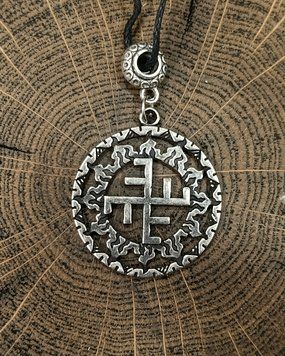
Kolovrat is one of the most recognizable solar symbols, embodying eternal motion and the force of life. The sign symbolizes an unbroken cycle of energy and protection from dark forces, and is also tied to its wearer's inner resilience.
Alatyr is a symbol of the center of the world and the source of all forces. The Alatyr shield looks like an eight-pointed star and embodies balance, harmony, and stability — the sign is often described as the eye of Rod, from which light and grace flow.
Molvinets is a protective sign against ill words and the evil eye. Unlike Kolovrat and Alatyr, Molvinets is addressed specifically at speech — slander, false accusations, and ancestral curses — rather than general protection or balance.
What Protection or Power Each Symbol Offers
|
Symbol |
Meaning |
|
Kolovrat |
Eternal motion, the force of life, protection from dark forces, inner resilience |
|
Alatyr |
The center of the world, balance and harmony, stability, a tie to ancestral power |
|
Molvinets |
Protection from ill words, the evil eye, slander, and ancestral curses |
Kolovrat is chosen more often when general strength and resilience against hardship matter. Alatyr suits those looking for grounding and stability rather than active drive. Molvinets is specific — it's taken directly against verbal negativity, not as a universal protection for every situation.
Charms for Men and Women — Is There a Difference
Some symbols are traditionally tied to a masculine or feminine sphere — Kolovrat is more often associated with warrior strength and resolve, historically closer to a masculine role, while charms with plant and lunar motifs are tied more to a feminine ancestral line and motherhood.
In practice, the division is more traditional than strict: Alatyr and Molvinets suit a man and a woman equally well, since balance and protection from the evil eye aren't tied to the wearer's gender. The difference shows up more often in the amulet's design than in the symbol itself.
If an exact match to traditional division matters, it's worth checking when choosing a specific symbol — not every sign has a clearly defined masculine or feminine version.
Ask Us If You're Not Sure Which Charm to Choose
- Online consultation. Describe what matters most to you — strength and resilience, balance, or protection from the evil eye — and we'll suggest a fitting symbol.
- Only accurate symbolism — no distorted versions of Kolovrat, Alatyr, or Molvinets, which sometimes show up from casual sellers.
- Orders are processed and shipped the same day, with no warehouse delays.
- A bronze charm costs less than a silver one of the same symbol — the exact price is listed on each product's page.
- Loyalty program: a cumulative discount of 1–10%, promo codes by newsletter, and a discount on the shop's birthday.
- A physical showroom where you can examine a charm in person and compare symbols before buying.
Buying a Slavic charm works right on the site — Kolovrat, Alatyr, Molvinets, and other symbols are gathered in one section, and we pack and ship the order the same day. If you're not sure which symbol fits your need, write to us before ordering — we'll go through the meanings together. International shipping is available with a 150 UAH prepayment, and the recipient pays the rest once the order arrives.
Questions About Slavic Charms
Can Several Slavic Symbols Be Worn at the Same Time
Yes, Kolovrat, Alatyr, and Molvinets solve different tasks and don't conflict with each other. Many practitioners wear two symbols at once — Kolovrat for strength and Molvinets for protection from the evil eye, for instance.
Do You Need to Practice Rodnovery to Wear a Slavic Charm
No, a charm is chosen for the symbol's meaning and personal resonance, not religious affiliation. Many people wear Kolovrat or Alatyr as a connection to their ancestors' cultural tradition, outside the religious context of Rodnovery.
How to Care for a Slavic Charm
Care depends on the material: bronze develops a patina over time that's usually left alone, while silver is wiped with a soft cloth if it tarnishes. It's best to store a charm separately from other jewelry to avoid scratching the symbol's carving.
How Does International Shipping Work and What Payment Is Required
International shipping is arranged separately from delivery within Ukraine: shipping abroad requires a 150 UAH prepayment, and the recipient pays the rest however is convenient once the order arrives. Cash on delivery is available domestically.
Can a Charm With a Rare Symbol Be Ordered If It's Not in the Catalog
Sometimes, yes — write to us about which symbol you need, and we'll look into what can be found or ordered. If a suitable option isn't available and can't be sourced, you'll be told honestly.