







|
Quantity
|
Total
|
||
|
|
|||
Stones in silver are natural gemstones set in a silver frame, where two different powers meet. The stone carries its own property: amethyst calms, turquoise guards on the road, moonstone sharpens intuition. The metal around it either strengthens that property or stays a plain background and simply holds the stone against the body. For this second role, silver is chosen more often than any other metal.
The pairing of stone and silver comes from a deep tradition. Silver has long been considered a lunar metal, sensitive to subtle energy, and so it was used to set stones that people looked to for protection, clarity, or calm. A gold or copper setting sounds different. Gold has its own pronounced solar force, and copper a warm, earthy one. Silver, by contrast, doesn't argue with the stone and lets it speak at full voice. This is what was valued by those who wear a gemstone for its power, with the shine a pleasant addition.
Why Stones Are Set in Silver More Often Than in Gold
Silver is a neutral conductor. It adds almost nothing of its own character to the stone and simply passes its power onward, to the body and to your intention. For a gemstone that already has a pronounced property, this is a convenient setting: it mutes nothing and recolors nothing.
Gold has a different character. It is a solar metal with a strong energy of its own, and beside it a quiet stone like moonstone or turquoise gets lost, as if drowned out by a louder voice. Gold works well where stone and metal pull in the same direction, for example a solar carnelian or citrine in gold sound as one. But for lunar, watery, and protective stones, silver suits better, because it leaves them room.
There's a practical side too. Silver has a soft sheen and goes with almost any shade of stone, from clear rock crystal to dense turquoise. It's more affordable than gold, so silver is used to set both inexpensive gemstones for beginners and rare author's stones. If you're only now choosing your first stone, a silver setting is a calm and reliable start.
Which Stones Are Most Often Worn in Silver
Each stone has its own property, and silver conducts them all equally well. A stone is most often chosen by task. Ask yourself what you need more right now: calm, protection, love, or clarity. Below are the gemstones set in silver more often than others, and what people wear them for.
-
Amethyst is the stone of calm. It quiets the mind, helps you fall asleep, and eases anxiety after a hard day.
-
Moonstone is the stone of intuition. It sharpens the inner ear, supports feminine energy, and gently guides in dreams and divination.
-
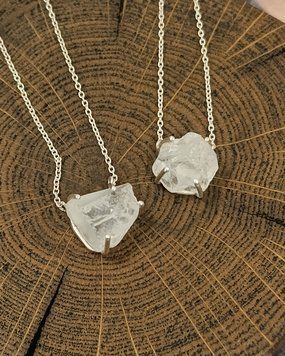
Rock crystal is the stone of clarity. It clears the mind and amplifies any intention, which is why it's often worn together with other stones.
-
Turquoise is the stone of the road. It guards the traveler, keeps you safe on journeys, and turns trouble aside from anyone on the way.
-
Rose quartz is the stone of the heart. It softens hurt, draws love, and restores your peace with yourself.
-
Black onyx is the stone of support. It holds boundaries, quells another's anger, and gives steadiness through a hard time.
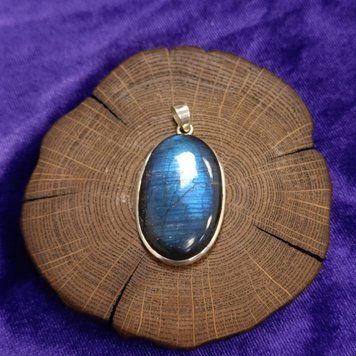
Most often these stones come as pendants. Silver pendants with natural stones are worn at the throat or over the heart, close to the body, so the stone works alongside you all day. Less often a gemstone is set into a ring or earrings, where it acts through the hands or the head. If you're unsure which stone is yours, start with a pendant: it's easier to wear all the time.
How to Care for a Stone Set in Silver
Two different materials live in such a piece, and each needs its own care. Silver darkens over time and asks to be cleaned. The stone, on the other hand, usually dislikes cleaning with soda, and some gemstones are even harmed by prolonged water. So the metal and the stone are tended separately, each by its own rules.
Silver is cleaned gently. Wipe the darkened setting with a special silver cloth or a cotton pad, taking care not to touch the stone itself. The soda solution that easily freshens smooth silver won't do when a porous or soft stone sits in the setting. Turquoise, moonstone, and malachite fear alkali and turn cloudy from it. If the stone is dense and hard, like amethyst or rock crystal, the piece can be quickly rinsed in cool water and wiped dry at once.
The stone itself has its own habits. Amethyst, rose quartz, and citrine fade in direct sun and lose color, so they aren't left on a windowsill for long. Turquoise and moonstone dislike hot water, perfume, and oils, which dull the surface. Store stones in silver apart from other jewelry, in a soft pouch or box, so hard stones don't scratch the soft ones. And once a month it does the stone good to lie a night under the moon — both a gentle cleansing and a return of its power.
Choose a Stone for Your Own Task
A stone is best chosen for a specific task. The simplest way is to do it together with a practitioner. Write to us with what you need right now — protection, sleep, confidence — and we'll suggest which stone and which setting suit that task. The reply comes from someone who works with stones themselves and knows them beyond descriptions. You can come to the showroom later, if you'd like to see the stone in person, but it's easier to start the conversation from the site.
-
A consultation with a practitioner before you buy. Tell us about your request in a message, and we'll help choose the stone and its setting before you even order.
-
Only genuine stones and hallmarked silver, with no glass, dyed imitations, or plated alloys.
-
Loyalty program: a cumulative discount of 1 to 10%, promo codes by newsletter, and a discount on the store's birthday.
-
Orders processed and shipped the same day.
-
A showroom in Kyiv on Bessarabska Square, if you'd like to see the stone's shade in person and hold the piece in your hand.
Stones in silver at Artifacts of the Vedun are always a real gemstone in real silver, chosen for your task, from a simple amethyst to a rare author's stone. An order is placed right on the site, and it's assembled and shipped the same day after confirmation. The price depends on the stone and the weight of the silver, and the exact cost is listed on each piece's page. If you want to buy with confidence, write to us first, and a practitioner will help you choose a stone for your goal.
What People Ask Most About Stones in Silver
Below are the questions most often asked about stones in silver, in messages and in the showroom.
Why does the silver under a stone darken over time?
Silver darkens from air, moisture, and your skin. It's a natural property of the metal, and tarnish doesn't count as a defect. You can clean the setting with a silver cloth, carefully working around the stone. Many practitioners read the darkening as a sign that the piece is working and absorbing excess.
Can a stone in silver be worn all the time, without taking it off?
Most stones can be worn every day, and constant contact only strengthens their bond with you. The piece is worth taking off before a shower, a bath, and cleaning with household chemicals, because hot water and alkali harm both soft stones and silver. Amethyst and rock crystal are more forgiving here than turquoise and moonstone.
How do I tell a real stone from glass?
A natural stone almost always has small natural marks: a slight unevenness of color, tiny inclusions, an uneven coolness to the touch. Glass and a dyed imitation look too even and uniform across the whole surface. The silver, meanwhile, is verified by its hallmark. If you're unsure, ask us: we work only with genuine stones and name the type of each one honestly.
How do I choose a stone if I don't know which one I need?
Start from your request. What matters more to you right now: calm, protection, love, or clarity. Write to us about it, and a practitioner will suggest one or two suitable stones, so you don't get lost across the whole catalog. This is an ordinary free consultation before ordering, and it commits you to nothing.
How do I arrange a return or exchange?
Stone jewelry in silver settings is a silver product. Under the law, these goods aren't subject to return within fourteen days — exchange is only possible in case of a factory defect or other flaw. You can check the piece right when you receive your order.