







|
Quantity
|
Total
|
||
|
|
|||
|
|
|||
The fifteen editions in this selection are all variants of one system from 1909, created by Arthur Edward Waite and artist Pamela Colman Smith. What differs between them is print color, paper quality, and, in a few cases, a completely different point of view on the same seventy-eight scenes. The structure and symbolism stay the same across every edition.
This same system is often searched for simply as classic Waite Tarot. The name is shorter, the meaning is the same.
One system, fifteen editions — why Pamela Colman Smith's name is now on the box
The entire 1909 deck was painted by Pamela Colman Smith, based on Arthur Edward Waite's concept — seventy-eight scenes, every detail, every symbol. For more than a century, the deck was known simply as «Rider-Waite Tarot», and the artist's name never appeared on the cover at all.
Smith received a one-time flat fee for the work and no royalties afterward, even though the deck became the most popular Tarot system in history. Starting in the 1970s, scholars and the practitioner community began pushing for her contribution to be recognized — hence today's names like «Waite-Smith», «Rider-Waite-Smith», or simply «Smith-Waite».
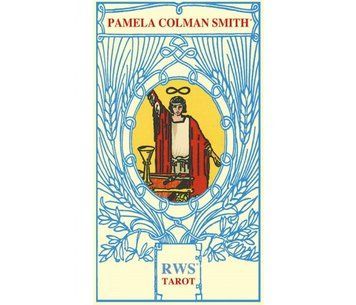
That's why the selection includes editions that name her directly: «Smith-Waite Centennial Tarot» and «RWS Tarot by Pamela Colman Smith». It isn't a different system — it's the same deck with credit finally restored to its name.
Classic, color-restored, or Centennial — which editions are closest to the 1909 original
Five editions in the selection reproduce the original as closely as possible, differing only in how bright and crisp the printed colors are.
|
Edition |
What's different |
Who it suits |
|
Original 1909 Tarot |
As close to the first print run as possible, muted colors |
Those who want historical accuracy |
|
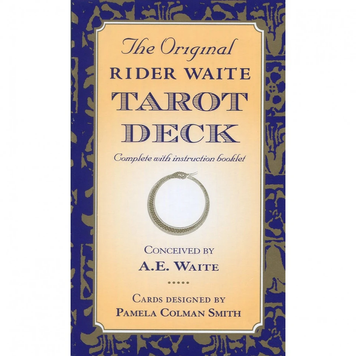
Original Rider Waite Tarot Deck |
Classic printing, standard palette |
A basic choice for everyday practice |
|
Radiant Rider-Waite Tarot |
Brighter, richer colors on the same scenes |
Those who want more visual vividness |
|
Smith-Waite Centennial Tarot |
An anniversary edition marking the deck's centennial, Smith's name in the title |
Collectors and anyone who values crediting the artist |
|
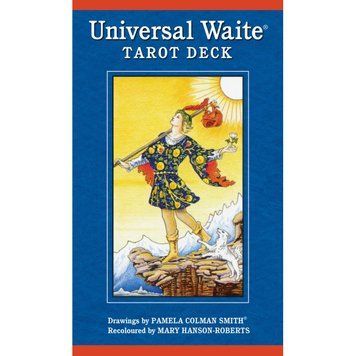
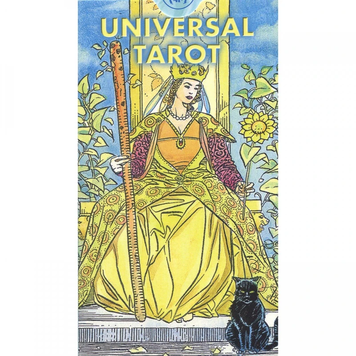
Universal Waite Tarot / Universal Tarot Cards |
A simplified, more modern redrawn line |
Those who want familiar symbolism in a different visual style |
The Learner's Rider-Waite Tarot and the Ukrainian-language edition of the system stand apart from this scale. The first adds meaning cues right on the cards for a first introduction, the second simply translates the guidebook into Ukrainian while keeping the original symbolism.
Tarot of A.E. Waite Blue Edition is another classic variant, its name pointing directly to the author of the concept. Here, the color in the title is about the box and slipcase design, not the symbolism.
Editions that reinterpret the classic scenes
Three editions in the selection don't just redraw the same seventy-eight scenes differently — they change the very point of view on them. All three come from the same publisher, Lo Scarabeo, and the same visionary idea from Pietro Alligo.
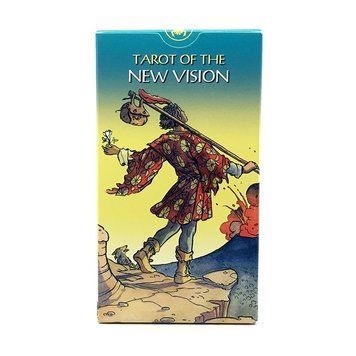
Tarot of the New Vision turns the scene 180 degrees — instead of looking straight at the Magician, the viewer sees what's happening behind him. The Cestaro brothers redrew every card from this new angle, and in some scenes it even changes the meaning: behind the chariot on the Chariot card, there turn out to be people in chains that the classic version simply doesn't show.
Viceversa Tarot goes further still: every card has artwork on both sides, 156 images instead of eighty. In the Major Arcana, the front and back carry different meanings in a spread — one side is about day and action, the other about night and understanding.
Before Tarot and After Tarot show the moment right before and right after each classic scene — what the Fool saw a moment before stepping off the cliff, and what happened right after that step. All three concepts come from the same publisher behind the original idea of reversing the perspective.
Talk to a practitioner before choosing a Rider-Waite Tarot edition
Fifteen editions of one symbolism — it's easy to mix up variants that are structurally identical but conceptually different, especially Viceversa with its double-sided cards. The simplest option is to ask in chat what kind of reading experience you're looking for.
- Honest advice on the difference between editions. A practitioner will explain how Viceversa differs from the classics in practice, before you order.
- Original editions only, no scans or reprints.
- Orders are processed and shipped the same day.
- The loyalty program gives a cumulative discount from one to ten percent, promo codes through the newsletter, and a separate discount on the shop's birthday.
- Help choosing between a classic edition and a conceptual reinterpretation based on your level and what you want from the deck.
Rider-Waite Tarot at Artifacts of the Vedun gets bought both for everyday practice and as a collector's edition. Placing an order takes a few minutes on the site, with processing and shipping the same day. Prices start at 595 hryvnias and depend on the edition: a collector's Centennial or a double-sided Viceversa cost more than the base classic print. If you're unsure which edition fits your practice, a consultant will answer in chat before you order.
What people ask about Rider-Waite Tarot
How does Universal Waite differ from the original 1909 edition?
The symbolism is the same, only the drawing style changes. Universal Waite uses a simplified, more modern redrawing of the same seventy-eight scenes, while the 1909 original reproduces the first print run as closely as possible, with more muted colors.
Can I read a spread with the double-sided Viceversa Tarot the same way as an ordinary deck?
No, not quite the same way. In the Major Arcana, the front and back carry different meanings in a spread, so you need to decide in advance which side you're using. The Minor Arcana in this edition carry the same meaning on both sides.
Why do three editions — New Vision, Viceversa, Before/After — take such an unusual approach?
All three come from the same publisher, Lo Scarabeo, and the same idea of showing the same classic scenes from a different angle. A 180-degree turn, double-sided artwork, the moment before or after an event — three different ways to reinterpret the same symbolism.
Can I return a deck if the edition doesn't work out?
Tarot decks are printed goods. By law, this category isn't eligible for return within fourteen days — an exchange is only possible for a manufacturing defect. Check the deck as soon as you receive your order.